
Hey guys!
This week, we’re touching on a few different corners of the food and wine world. A visit to Gaggan in Bangkok, Michelin’s new winery ratings, and a producer in the Roussillon who’s worth your attention. Hope you enjoy 🙏
Who is Gaggan?🧑🍳
Highlighting the chef who turned Bangkok into the epicenter of modern Indian cuisine

Pictured: Chef Gaggan. Image by Chefin Inc.
I just got back from Bangkok earlier this week and I can’t stop thinking about it. It’s a truly special city, and if you ever have the chance to go, you absolutely should. While I was there, I was lucky enough to dine at Gaggan, currently ranked the best restaurant in Asia and sixth in the world on the World’s 50 Best list. We also had the chance to spend time with the chef himself, Gaggan Anand, and his team, which made an already wild experience even better. I’ll be honest: before this trip, I didn’t know much about him. I did, however, 2x speed through his Chef’s Table episode on the flight over (highly recommend it’s a great episode).

Gaggan Anand is an Indian-born chef and one of the most influential figures in modern fine dining. Raised in Kolkata, he originally trained as a professional musician before making his way into hospitality. His cooking philosophy was shaped in part by time spent at the legendary El Bulli in Spain, where experimentation and rule-breaking was the standard. In 2010, he opened Gaggan in Bangkok, a restaurant that would go on to redefine Indian cuisine on the global stage. His food blends Indian flavors with French technique and Thai and Japanese influences, all delivered with a playful energy that challenges what fine dining is “supposed” to look like.

Pictured: Gaggan Dinner
The meal itself was nothing short of spectacular. A roughly 4 hour experience built around a 25 course tasting menu, complete with music, lighting, and wine, designed to entertain, not just feed you. It felt less like a dinner and more like a performance, which pretty much sums up Gaggan as a chef. Huge thanks to him and his team for hosting me, it’s a night I won’t be forgetting anytime soon.
The Michelin Guide Comes to Wine 🛞
Michelin introduces the MICHELIN Grape, extending its rating system from restaurants to wineries

Pictured: Three Michelin Stars. Image by Michelin
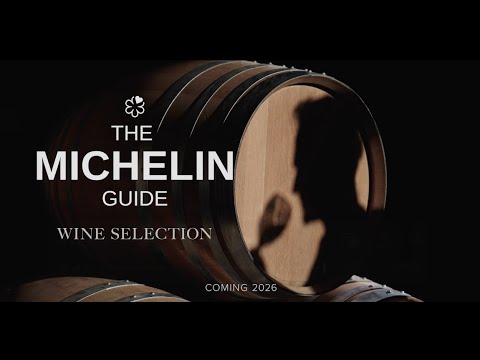
The Michelin Guide is officially expanding into winery and producer ratings with a new distinction called the Michelin Grape, applying the same framework it uses for restaurants to the world of wine. The system will evaluate estates as a whole and will award One, Two, or Three Grapes based on five core pillars: vineyard health and farming, technical execution in the cellar, clarity of identity and sense of place, balance in the wines, and consistency across multiple vintages. According to Michelin, assessments will be carried out by a team of wine inspectors such as former sommeliers, critics, and winemakers. The first ratings are set to debut in 2026, starting with Burgundy and Bordeaux, before expanding to other regions globally.
Whether this is ultimately good for wine depends on where you’re standing. On one side, Michelin’s attention could bring real visibility to smaller producers, especially domaines where farming, patience, and consistency matter far more than chasing scores. A system like this also offers a familiar entry point for drinkers, one that can help spotlight wineries doing genuinely thoughtful work in the vineyard and cellar.

Pictured: Official Michelin Grape. Image by Michelin
On the flip side, there’s a real risk that this becomes just another top-down rating system, one that naturally favors regions, styles, and producers already aligned with Michelin’s institutional worldview, while putting pressure on smaller growers to conform to an external standard. Many natural winemakers have long rejected points, rankings, and even official classifications altogether. In France for example, Vin de France is used to step outside the rigid framework of AOC. Still, despite this, I tend to see this kind of attention as a net positive. If nothing else, it reinforces that wine deserves to be taken seriously and recognized as part of a broader cultural conversation.
Curious to hear your opinions on this topic if you have any!
Producer Highlight ⭐
One of our favorite parts of wine is the discovery: we’re constantly being put on to new regions, producers, and cuvées from our friends. We’ll never be able to try EVERY wine, but we want to take a moment to mention some producers that excite us!
Pedres Blanques 🍷
Location: Roussillon, France 📍

Pictured: Roussillon, France. Image by Wikipedia
Pedres Blanques is the project of Rié and Hirofumi Shoji, two Japanese vignerons who met while studying in Beaune and came up through some of Burgundy’s most legacy cellars. Rié trained with estates like Jacques-Frédéric Mugnier and Dominique Derain; Hiro spent five formative years at Domaine de Chassorney. Deeply committed to vineyard work and organic farming, they knew early on that Burgundy itself would be financially out of reach. Their search eventually led them far south, to Collioure, where they found steep, abandoned terraces overlooking the Mediterranean and a retiring grower willing to pass the vines on. Remote, windswept, and dramatically perched above the sea, the site felt both uncompromising and alive, exactly what they were after.

Pictured: Rié and Hirofumi Shoji. Image by Becky Wasserman & Co
Their domaine takes its name from the place itself: Pedres Blanques, “white rocks” in Catalan, a reference to the pale schist boulders embedded in the vineyard. Farming here is extreme. The harsh wind tears through the terraces, the climate is arid, and everything must be done by hand. The upside is no frost, very little disease issues, and the ability to farm with minimal intervention. Their original parcel, old Grenache rooted in schist at altitude, produced their first wines beginning in 2017, vinified in Banyuls with whole clusters. The resulting Grenache is perfumed and savory, toting the line between dark fruit, herbs, and umami.

Pictured: White Rocks (Pedres Blanques). Image by Becky Wasserman & Co
What began as a single cuvée has slowly expanded. Alongside their original Grenache, Rié and Hiro now also bottle a second wine from vines belonging to Alain Castex, further grounding the project in the history of the region. Despite growing global demand and tight allocations, Pedres Blanques remains a study in restraint: wines made without pressure, guided more by patience and place.

Pictured: Pedres Blanques 2022 at Mod Kaew Wine Bar
These wines have felt like unicorns to me for a while now. Anytime I see them in the U.S., they’re either instantly sold out or priced well beyond reach. So you can imagine my surprise when I was in Bangkok last week and saw Pedres Blanques on nearly every wine list in the city, at prices that felt almost like a mistake. From what I was told, the couple allocates a good portion of their production to Asia, where demand is lower, making the wines more accessible. We grabbed a bottle at Mod Kaew Wine Bar, and it fully lived up to the hype: ripe, dark-fruited southern Grenache with an unmistakable herbal freshness and lift. I also managed to track down a particularly special bottle of theirs while I was there, so stay tuned for that video.
Wine Club Updates 🍷 📦
December’s shipment is heading out this week! Excited for you guys to try the wines this month. If you run into any issues, please reach out to [email protected]. You can also shoot us a message for feedback if you have any!
Not a member yet? You can sign up here:

That’s it for today! Hope you guys are gearing up for the holidays well, can’t believe we’re almost at the end of the year already.
Thank so much for reading, and as always, drink responsibly! 🥂